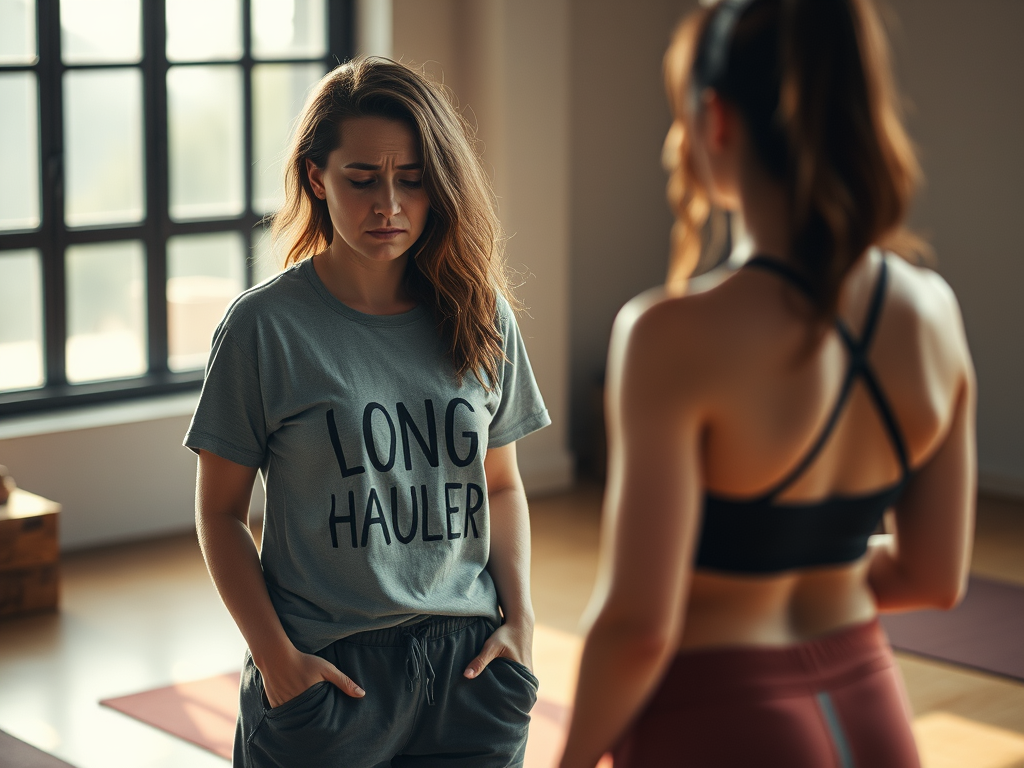
I want to be positive but not toxic.
Trying hard not to be bitter towards healthy people my age is often the most challenging part of my day. To see them balance so much: work, parenting, self-care, relationships, and hobbies can be inspiring until I remember that it is not possible for me, right now.
Maintaining my sense of reality is a crucial part of my self-care. When this reality has been described to others, it has elicited some interesting responses. I have been questioned by my medical professionals if I even want to get better, or told that I am the only thing preventing me from healing. Ok, so the fact that I spend all day every day on getting better I guess, means nothing?
When people respond in this way, they blame me for having Long-Covid, that I went out and asked for POTs, and now refuse to let it go. My reality is a threat to their beliefs that our minds can do anything. So they cling to the belief that my negative mindset is what is keeping me ill. They need to take a biology or a health class because that is not how the body or illnesses work. I know now not to listen to them. I refuse to gaslight myself with unrealistic positivity, also called toxic positivity.
Toxic positivity definition:
“Pressure to stay upbeat no matter how dire one’s circumstance is”, which may prevent emotional coping by feeling otherwise natural emotions.[2] Toxic positivity happens when people believe that negative thoughts about anything should be avoided. Even in response to events which normally would evoke sadness, such as loss or hardships, positivity is encouraged as a means to cope, but tends to overlook and dismiss true expression.” –Wikipedia
This can show up in conversations with non-disabled people in many ways. Here are just a few of the more common phrases I have heard directed at myself or someone I know.
- “At least you can walk (or insert whatever you can still do).”
- “You can do anything you set your mind to.”
- “Don’t let this illness control your life.”
- “Are you really disabled?”
- “You can’t be disabled, you don’t need a wheelchair.”
- “You need to work like the rest of us so do it.” or “You feel that bad if you can work.”
- “What is the real reason you are cancelling because I know you can’t be sick again!”
- “You are too young to really know what pain is. What till you get to my age.”
- “My friend just started a raw food diet and got rid of her chronic fatigue! So you should do that.”
- “Affirmations cured my depression, maybe that is all you need?”
The pattern here is simple: Twisting something said to them into a projecting, demoralizing, and/or invalidating statement. Completely bypassing how the person feels, the seriousness of what they might have shared, or the vulnerability it takes to be disabled and voice your needs. Their intention is irrelevant to me at this point; I will not be made to feel any of this is my fault.
So, when I share positive things, everyone must be happy, then, right? Right!
You would think that if a provider said those things to me, if I came in next time sharing a positive activity, experience, or change in my treatment, they would just be happy for me.
Nope. Then it is either said and/or charted in my visit notes that I am improving. Or my mental health conditions will be centered in the visit. Like they were right all along, I was just anxious. Versus still focusing on the fact that I continue to feel shitty despite the small win in my life. That I still have a chronic condition, but then I would have more work that day, I guess.
I do try to be positive on my own when and where I can. Some things always help my mindset. Like gratitude journaling twice daily, my husband’s love for me, our kitties playing in the yard, talking with my mom, or seeing my niece on a video call. All of these things or people are huge positive aspects of my life.
I also remain positive about my body and health, looking for better treatments, staying connected to my providers who do support me, and being active in the disability community.
Never is there any intention of blocking any kind of symptom relief, healing, or a joyful moment. Acknowledging my grief, pain, and difficulties with my health conditions does not cancel out all the effort and positive intention I put into myself.
Positivity is simply defined as “the quality or state of being positive”. It is so different than toxic positivity. There is no attachment to outcome when being positive; it is just holding the best outcome close to my heart. Knowning that something different might happen, and it might suck, I might get mad or sad or depressed and no matter how I react to the outcome is okay.
Undesired results or events typically evoke emotions that are often labeled as negative. There’s something not right about feeling that way. Toxic positivity would tell me to just keep trying or ignore what just happened, or that I should be positive because that’s how I’m supposed to get better.
My belief is that to deny myself the ability to feel what I feel (in ways that do not harm myself or others) about something harms me emotionally and physically. I can allow the space and cultivate self-compassion to experience this moment, knowing that there will be a time in the future when I will undoubtedly feel positive about things again.
Forced Loneliness: Toxic Positivity and Conspiracy Theories.
Since getting Long-Covid and even before when I was trying to figure out my experience with Ovarian Insufficiency, it became pretty clear I was viewed as a downer. That when people asked me how I was, they didn’t really want to know, especially after a yoga class. Which, in hindsight, I shouldn’t have been surprised by this.
Yoga studios are often whitewashed, gentrified, and everything is based around toxic positivity and individualism. They are places for the able-bodied to get in shape and meditate, a little. I naively loved it though. To this day, I still love all the 8 limbs of yoga, but do not contribute to any yoga spaces that bastardize this ancient spiritual practice. Or exclude any type of body or person from their spaces.
I first noticed this trend of toxic positivity in yoga spaces within the US around 2017. I tried different studios but couldn’t quite feel at home anywhere. Nothing would prepare me for the extreme isolation, no one new was coming.
In 2020, when the pandemic hit, it would stop the world for a little while. Then humans being humans couldn’t wait to get back to “normal”. So many were tyring to be positive no matter what happens and they would get back into the world.
So many people never did though. Either because they died or because they were disabled by covid or not having their other chronic conditions managed enough due to shortages of care and providers.
The wellness world seemed to be where the medical conspiracy theories started, amongst privileged white people who could buy health and their way out of any danger. Then it began to spread to others in that community. The vaccine lies, the lies around masks causing brain damage, or that covid was not even real. These conspiracy theories, amongst others, are still discussed on podcasts and social media.
This is toxic positivity amplified. These people are taking a dangerous virus and all its impacts on other humans, and just saying that none of it is real or meaningful enough to mess up a healthy person’s routine.
So I quickly and happily distanced myself from all of that. The grief didn’t come until later, and I still get sad knowing I will most likely never go to another yoga class again. The only positive thought I can have about this is that I had the opportunity to learn how far from its true meaning and roots yoga has been dragged away. To see how it has been colonized.
That’s me being positive. I found a lesson while still acknowledging that I still feel sadness about not being able to participate in a group of people practicing asana. I know I went off on a tangent a little bit there. It is the reality, though, my disability, my experience with these chronic health conditions, do impact my whole life.
How to manage not giving up but not forcing positivity?
I do feel isolated; I feel like my life has been put on pause. I am now taking a different path in life, a path full of traps that is overgrown and an uphill journey the whole way. If I continue with this metaphor I could say that there will be breaks in the trees where I will see the sky, that even the swampiest areas will have amazing animals and that when I find a spot to rest it will be glorious. That is me being positive.
If I said that this path isn’t that bad, that I will just have to make the best of it, keep pushing, and not rest when I need to. I chose this path because I didn’t believe I could heal before. It is my fault that it is now even harder. That is toxic positivity, that is bullshit.
If you are a person trying to make me, or someone you know, feel less sad by either comparing the situation to ones you think are worse, encouraging us to just be grateful, or simply skipping over the obvious emotional distress we feel because it makes you uncomfortable. You are engaging in toxic positivity, ableism, and making us feel worse. How ’bout you stop doing that?
To those of us on the receiving end. Pick your battles wisely. What I mean is I do not feel it is worth correcting or calling out a stranger, an acquaintance, or a co-worker I barely encounter or will never come into contact with again. For friends, family, chosen family, or just anyone whom I value in my daily life. I will kindly help them understand what they are doing and how it hurts me.
Remember, we owe no one anything. We can simply choose to walk away from the conversation or disengage in any way we see fit. Protect your peace. Protect yourself. I will do the same.


Leave a Reply